Chandler sits on the Lower Terrace of the Salt River alluvial plain, where fine-grained deposits dominate the upper 6 to 9 meters. These silty clays and clayey silts exhibit moderate to high plasticity, with liquid limits frequently above 45 and plasticity indices ranging from 18 to 30. The shrink-swell potential here is real. We run Atterberg limits on every sample from Chandler to flag problematic clays before foundation design begins. The data feeds directly into the USCS classification and guides decisions on floor slab type, pier depth, and moisture control. Without these numbers, you are guessing. Combining the plasticity results with a resistivity survey helps map lateral variability across large lots, which is common in Chandler’s master-planned communities. The IBC 2021 and ASCE 7 both require site-specific characterization when plasticity exceeds certain thresholds. We deliver that data fast.
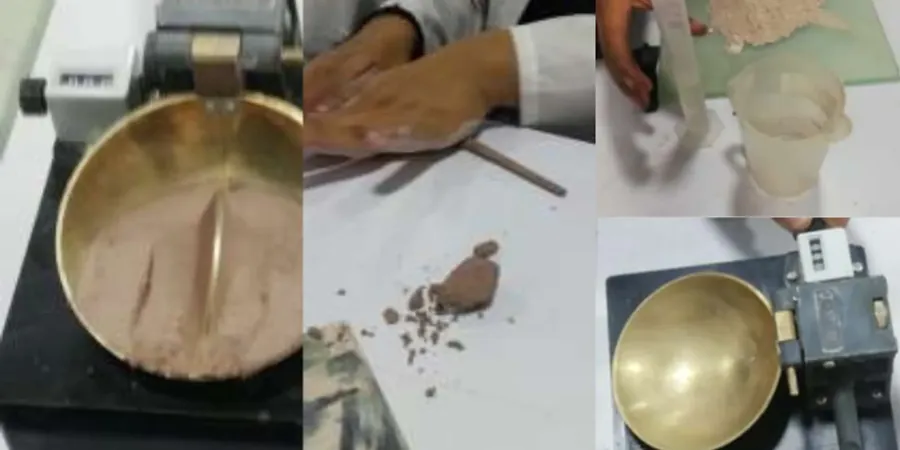
In Chandler’s expansive clays, the plasticity index is the single most reliable indicator of volume change risk. Ignore it at the slab’s expense.
Methodology and scope
Local considerations
Chandler’s semi-arid climate creates a deceptive moisture profile. The near-surface soils are often dry and hard, but the underlying clay layers retain water from irrigation and seasonal monsoon events. That contrast drives cyclic shrink-swell. A plasticity index above 25 in these soils correlates with differential heave of 25 to 50 mm under a slab. The risk multiplies when the active zone depth exceeds 1.5 m, which is common in older Chandler neighborhoods with deep-rooted trees. We correlate the Atterberg limits with suction measurements to estimate the equilibrium water content. If the plasticity data shows high potential, we recommend moisture barriers and post-tensioned slabs. Starting with a georadar survey can locate buried utility trenches that alter local drainage — another common source of differential movement in Chandler.
Explanatory video
Applicable standards
ASTM D4318-17, ASTM D2487-17, IBC 2021 Section 1803, ASCE 7-16 Chapter 11
Associated technical services
Natural Moisture Content & Unit Weight
We determine in-situ water content and dry density on undisturbed samples. These values are used to calculate saturation degree and void ratio, critical for settlement estimates in Chandler’s compressible clays.
Sieve & Hydrometer Analysis
Full grain-size distribution per ASTM D6913 and D7928. Combined with Atterberg limits, the data defines the USCS group symbol and supports the design of drainage layers and filter zones.
Direct Shear Test
We perform consolidated-drained direct shear on remolded specimens at the in-situ density. Peak and residual friction angles help evaluate slope stability and retaining wall design in Chandler’s residential developments.
Typical parameters
Frequently asked questions
What are Atterberg limits and why do they matter in Chandler?
Atterberg limits measure the water content boundaries between solid, plastic, and liquid states of fine-grained soil. In Chandler, where expansive clays are common, the liquid limit and plasticity index directly predict shrink-swell potential. The values are used in USCS classification and to assess foundation risk under IBC 2021.
How much does Atterberg limits testing cost in Chandler?
The typical cost for a complete Atterberg limits test (liquid limit, plastic limit, and plasticity index) ranges from US$50 to US$80 per sample. Volume discounts apply for projects with more than 10 samples. The price includes multi-point liquid limit determination per ASTM D4318.
How long does the test take and what sample size is needed?
Results are available within 48 to 72 hours from sample receipt. You need a minimum of 200 grams of material passing the No. 40 sieve. The sample must be received in a sealed container to preserve moisture content. We accept both disturbed bag samples and thin-walled tube samples.
Can Atterberg limits alone identify expansive soil risk?
No. The plasticity index is a strong indicator, but we combine it with free swell tests, suction measurements, and the activity ratio (PI / clay fraction) for a complete assessment. In Chandler, clays with PI above 25 and activity above 0.75 require special foundation measures such as post-tensioned slabs or deep piers.