Our lab team runs the full suite of equipment for road subgrade design in Chandler, from standard Proctor hammers to CBR load frames and California bearing ratio molds. We start with a field inspection using a dynamic cone penetrometer to get quick readings of in-situ strength. Then we sample the subgrade soil at multiple depths and bring it back to our Chandler facility for controlled testing. The goal is clear: produce a reliable design CBR value and compaction curve that matches the conditions your contractor will actually find on site. Before the structural section of the pavement is finalized, we also run granulometría to verify the soil gradation fits the project specs.
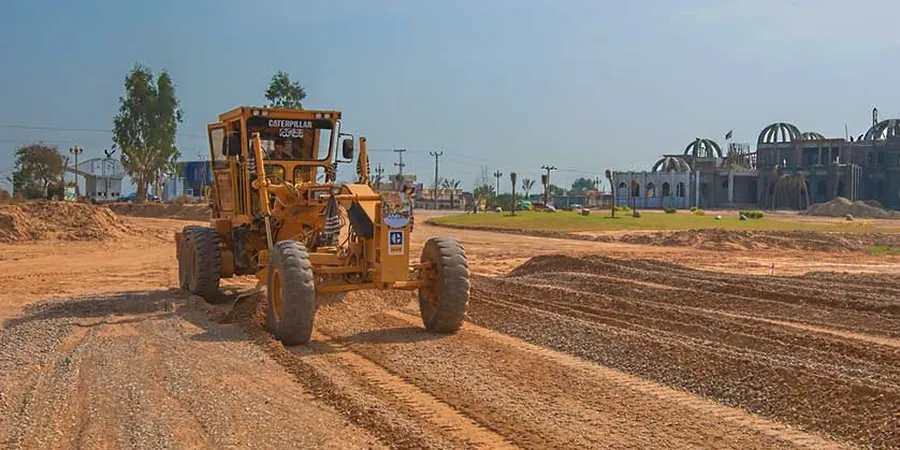
A soaked CBR at optimum moisture tells you the real bearing capacity after the first rainy season in Chandler.
Methodology and scope
Local considerations
Chandler sits at about 1,200 feet elevation with a semi-arid climate, but summer monsoons can dump 2-3 inches in a single afternoon. That rapid wetting turns a dry, competent subgrade into a soft layer that can rut and pump under traffic. If the road subgrade design doesn't account for this moisture variation, you get premature pavement failure within two to three years. We've seen sections of Riggs Road and Chandler Boulevard show longitudinal cracking because the subgrade wasn't designed to handle the swell-shrink cycles of the local clays. A proper laboratory program that includes swell testing and soaked CBR is the only way to avoid that risk.
Applicable standards
ASTM D1883-21 (CBR of laboratory-compacted soils), ASTM D698-12 (Standard Proctor compaction), ASTM D4318-17 (Atterberg limits), AASHTO T-193-13 (CBR for pavement design), IBC 2021 Section 1803 (geotechnical investigation requirements)
Associated technical services
Subgrade CBR & Compaction Testing
Full laboratory CBR testing with soaked and unsoaked conditions, plus Standard and Modified Proctor curves to determine maximum dry density and optimum moisture. Includes swell measurement and sample preparation per ASTM D1883.
Atterberg Limits & Soil Classification
Liquid limit, plastic limit, and plasticity index determined per ASTM D4318. Combined with sieve analysis (ASTM D6913) to classify the subgrade soil according to the USCS and AASHTO systems for design input.
Typical parameters
Frequently asked questions
What is the typical CBR range for subgrade soils in Chandler?
For the silty sands and low-plasticity clays common in Chandler, soaked CBR values typically fall between 3% and 12%. Granular borrow materials can reach 15-20%. We always recommend soaked testing because the monsoon season can saturate the subgrade within hours.
How much does a road subgrade design study cost in Chandler?
A standard road subgrade design package including CBR, Proctor, and Atterberg limits ranges between US$1,140 and US$2,770. The final price depends on the number of samples, the need for swell testing, and whether field density verification is included.
Do you recommend lime or cement stabilization for low-CBR subgrades in Chandler?
Yes, for subgrades with soaked CBR below 5% or plasticity index above 20, lime stabilization is a common solution. We run pH and Eades & Grim tests to determine the optimal lime content. Cement stabilization works better for granular soils with low PI. Both options require a new set of CBR and compaction tests after treatment.