Chandler grew fast from a small agricultural town into a major tech and logistics hub in the Phoenix metropolitan area. That transformation placed heavy demands on its road network. Many collectors and arterial streets built decades ago now carry truck traffic to distribution centers. The original pavement sections often lack records of subgrade strength. A laboratory CBR test is the standard method to characterize the California Bearing Ratio of fine-grained soils and granular bases. Results from this test directly influence the thickness design of flexible pavements under AASHTO 1993 or Mechanistic-Empirical methods. For new subdivisions in the Ocotillo area, the city requires documented CBR values before approving final plat. Without that data, engineers risk overdesigning or underdesigning the structural section. Both outcomes carry real costs.
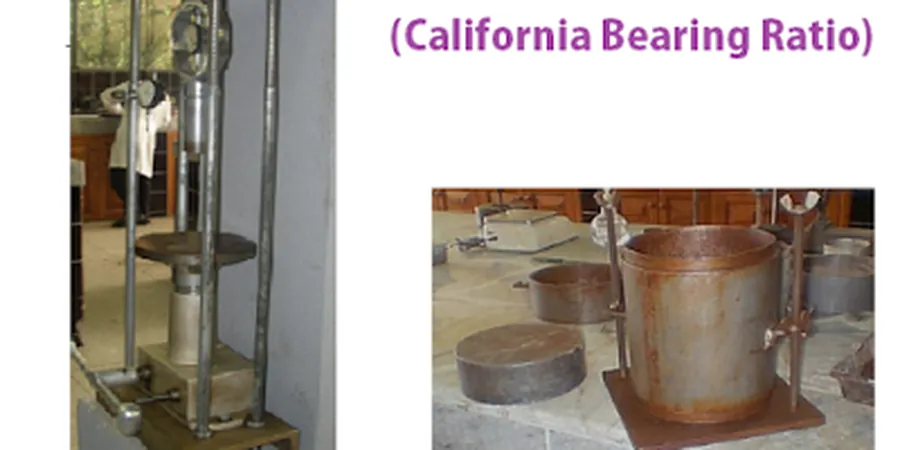
A soaked CBR of 6 or less typically triggers subgrade improvement or a thicker structural section to prevent premature failure.
Methodology and scope
Local considerations
Chandler sits on Quaternary alluvium from the Salt River, a deposit that varies laterally from clean sands to plastic clays. Groundwater lies deep, typically below 50 meters, so capillary rise does not affect subgrade moisture under normal conditions. However, the region experiences intense summer monsoon storms that can saturate the upper meter of soil within hours. A pavement designed with an unsoaked CBR of 20 may fail after one wet season if the actual soaked value is 5. Differential settlement at utility trench crossings is another common issue. The backfill in those trenches often lacks compaction control, creating localized soft spots. Without a laboratory CBR test on the actual borrow material, the pavement section remains a guess. The cost of repairing a failed street exceeds the cost of testing by an order of magnitude.
Applicable standards
ASTM D1883-16, AASHTO T 193-13, ASTM D698-12 (Standard Proctor)
Associated technical services
Soaked CBR (4-day immersion)
Simulates worst-case moisture intrusion after monsoon rains. Includes swell measurement and stress-strain curve.
Unsoaked CBR
Tests the specimen at as-compacted moisture. Useful for quality control during dry-season construction.
CBR on treated soils
Evaluates bearing capacity after adding cement, lime, or fly ash. Helps optimize additive dosage.
CBR on base and subbase materials
Tests crushed aggregates and granular borrow to verify they meet ADOT or city specifications.
Typical parameters
Frequently asked questions
What is the difference between soaked and unsoaked CBR?
The soaked CBR test immerses the compacted specimen in water for 96 hours before penetration. It measures strength loss from moisture intrusion. The unsoaked test penetrates immediately after compaction. Soaked values are always lower and represent the critical design condition for pavements in regions with wet seasons, including Chandler's monsoon climate.
How many soil samples are needed for a CBR test?
ASTM D1883 requires at least three specimens compacted at the same moisture and density to obtain an average CBR. If the material varies across the site, each distinct soil type needs its own set of three specimens. A typical pavement project in Chandler requires between 2 and 6 CBR tests, depending on the length of the road and soil variability.
How much does a laboratory CBR test cost in Chandler?
The typical cost for a single soaked CBR test with swell measurement ranges from US$130 to US$190. Unsoaked tests are slightly less. The price includes compaction, soaking, penetration, and a report with the load-penetration curve. Volume discounts apply for projects requiring 10 or more tests.
Can CBR be estimated from other soil tests?
Several correlations exist, linking CBR to Atterberg limits, grain size, or Proctor results. However, these estimates carry wide error bands. A direct laboratory CBR test is always recommended for final pavement design. In Chandler, the correlation between soil classification and CBR is weak because of the heterogeneity of alluvial deposits.
How does the city of Chandler use CBR results?
Chandler's Engineering Department reviews CBR data as part of the site plan and subdivision approval process. The results determine the required pavement structural number per AASHTO 1993. If the soaked CBR falls below 6, the design must include a geotextile separator, thicker aggregate base, or subgrade treatment such as lime stabilization.