Chandler's rapid growth from a small agricultural town into a major suburban hub has reshaped its landscape, but the underlying geology remains largely unchanged. The city sits on deep alluvial deposits from the Salt and Gila Rivers, with interbedded gravels, sands, and clays that vary drastically over short distances. Understanding how water moves through these layers is critical for everything from basement excavations to detention basin design. A field permeability test (Lefranc/Lugeon) provides direct measurement of hydraulic conductivity in place, avoiding the errors that come from lab samples disturbed during transport. Before finalizing drainage plans, many engineers combine this test with resistivity surveys to map preferential flow paths across a site.
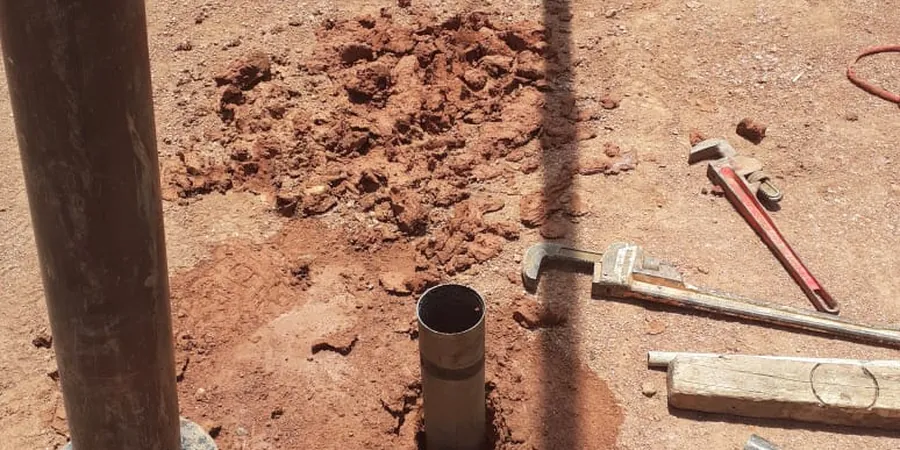
A single field permeability test can prevent thousands in stormwater damage by revealing hidden flow paths beneath the surface.
Methodology and scope
Local considerations
A common mistake in Chandler's construction sector is relying solely on lab permeability from remolded samples. Those values often overestimate drainage capacity because they ignore macropores, root channels, and gravel lenses that dominate real infiltration. One developer recently had to redesign a 12-acre retention basin after post-construction ponding revealed actual permeability was half the lab prediction. A field permeability test (Lefranc/Lugeon) run in multiple boreholes across the site catches these heterogeneities before concrete is poured. For Chandler's mixed alluvium, testing at different depths also identifies perched water tables that can undermine slab-on-grade foundations.
Applicable standards
ASTM D6391-11 (Standard Test Method for Field Measurement of Hydraulic Conductivity — Lefranc), ASTM D4630-19 (Standard Test Method for Determining Transmissivity and Storage Coefficient of Low-Permeability Rocks — Lugeon), ASTM D5092-04 (Standard Practice for Design and Installation of Groundwater Monitoring Wells)
Associated technical services
Lefranc Permeability Test
Single-borehole constant or falling head test for shallow alluvial soils. Ideal for detention basins, infiltration trenches, and foundation drainage design. Delivers K values at discrete depths with rapid turnaround.
Lugeon Packer Test
Multi-stage packer test for deeper or fractured formations. Used when evaluating dam foundations, cutoff walls, or grouting programs in Chandler's cemented gravels. Provides transmissivity and storage parameters.
Typical parameters
Frequently asked questions
How is the Lefranc test different from a lab permeability test?
The Lefranc test measures hydraulic conductivity in situ, meaning the soil structure, macropores, and natural layering are preserved. Lab tests on remolded samples often miss these features, leading to values that can be off by an order of magnitude in Chandler's heterogeneous alluvium.
What does a field permeability test (Lefranc/Lugeon) cost in Chandler?
Typical pricing for a single borehole Lefranc test in Chandler ranges between US$540 and US$1,160, depending on depth, number of test stages, and site access. Lugeon tests with packer assemblies are at the higher end of that range.
How many test holes are needed for a 5-acre commercial site?
For Chandler's alluvial fans, a minimum of three to five boreholes is recommended to capture the spatial variability in permeability. The exact number depends on the project's drainage design criteria and the presence of clay lenses or caliche layers.
Can the Lugeon test be used in Chandler's cemented gravels?
Yes. The Lugeon packer test is specifically designed for low-permeability or fractured materials, including the cemented gravels (caliche) common in older Chandler neighborhoods. It isolates sections of the borehole to measure both matrix and fracture flow.