Chandler sits at about 1,200 feet above sea level in the Sonoran Desert, where the topsoil is often a mix of silty sands and fat clays. Below that, the geological profile shifts to cemented caliche layers that can be either a blessing or a headache for deep foundations. Our pile foundation design process starts with a thorough site investigation to map these layers accurately. We combine SPT borings with cone penetrometer testing to define soil behavior at depth. For projects near the Gila River Indian Community or along the I-10 corridor, we also integrate resistivity surveys to detect groundwater and buried channels that affect pile performance.
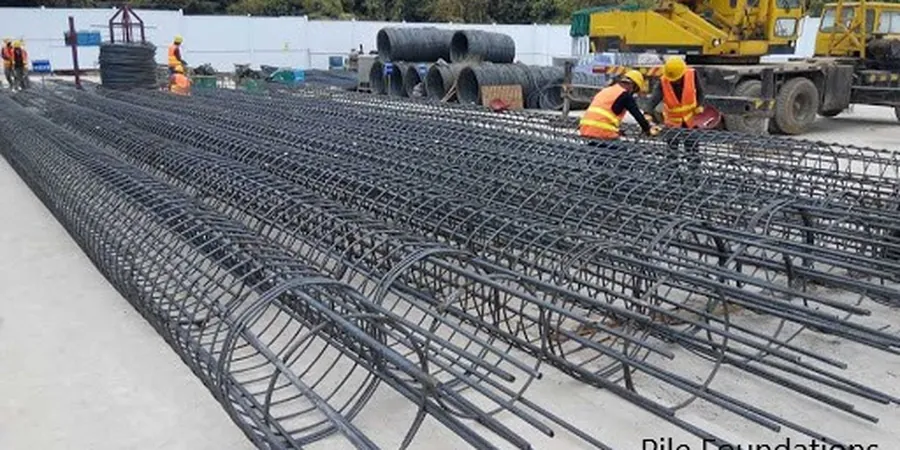
Pile foundation design in Chandler demands site-specific skin friction values — nearby data can mislead due to sharp lateral variability.
Methodology and scope
- Boreholes with SPT per ASTM D1586 to 80-120 feet depth
- Pile load tests (static and dynamic) per ASTM D3966
- Pile integrity testing (PIT) to check continuity after installation
Local considerations
Chandler's soil profile includes expansive clays that can shrink and swell up to 4 inches seasonally. Combined with the region's moderate seismic hazard (peak ground acceleration ~0.2g per ASCE 7-22), a poorly designed pile foundation can experience differential movement or even structural failure. We follow IBC Chapter 18 and ASCE 7 site classification to account for these risks. Our pile foundation design directly addresses lateral spread potential near canals and the corrosion risk from saline soils common in the East Valley.
Applicable standards
ASTM D1586-18 (Standard Test Method for SPT), ASTM D3966-18 (Standard Test Methods for Pile Load Tests), ACI 543R-12 (Guide to Design, Manufacture, and Installation of Concrete Piles), IBC 2021 Chapter 18 (Soils and Foundations)
Associated technical services
Static and Dynamic Load Testing
We perform high-strain dynamic testing per ASTM D4945 and static compression tests to verify design capacity. This gives you real-world performance data before full production.
Pile Integrity Testing (PIT)
Using sonic echo and impulse response methods, we check for cracks, necking, or voids in drilled shafts and driven piles. Quick field results with minimal disruption.
Seismic Pile Analysis
For Chandler projects near active faults or with high occupancy, we model pile-soil interaction under earthquake loading. Includes liquefaction assessment per Youd-Idriss (2001) criteria.
Typical parameters
Frequently asked questions
How deep do piles typically need to be in Chandler?
Depth varies with soil conditions, but most projects require piles reaching 60 to 100 feet to pass through the upper clay and caliche layers and bear on dense sand or gravel. Our borings confirm the exact depth per your building load and seismic category.
What is the typical cost range for pile foundation design in Chandler?
For a complete design package including field investigation, laboratory testing, and structural calculations, expect between US$1,860 and US$6,530. The final quote depends on number of borings, depth, and load test requirements.
Can pile design account for expansive clay movement?
Yes. We design piles with a structural sleeve or void former in the upper 5-8 feet to isolate them from seasonal shrink-swell cycles. The pile cap is then connected rigidly below the active zone, preventing uplift forces from reaching the superstructure.
Do I need a separate geotechnical investigation before pile design?
The reference range for this service in Chandler is US$1.860 - US$6.530. The final price depends on the project scope and volume.
How long does the pile design process take for a typical Chandler project?
From initial site visit to final design report, plan on 3 to 5 weeks for a standard commercial building. Complex projects with load testing or seismic analysis may take 6 to 8 weeks. We coordinate with your structural engineer throughout.