Chandler's desert soils present a unique challenge for flexible pavement design. The alluvial fan deposits that underlie much of the city produce variable subgrade conditions, with silty sands and gravelly layers shifting within short distances. Before any structural section is calculated, we need reliable CBR data and moisture-density relationships from the project site. A common oversight is assuming uniform conditions across a parcel; in Chandler, a single pavement cross-section can encounter both competent sand and collapsible silt within 50 meters. That variability makes the CBR vial test essential for establishing realistic design CBR values, while the subrasante vial evaluation identifies weak zones that require stabilization or increased thickness.
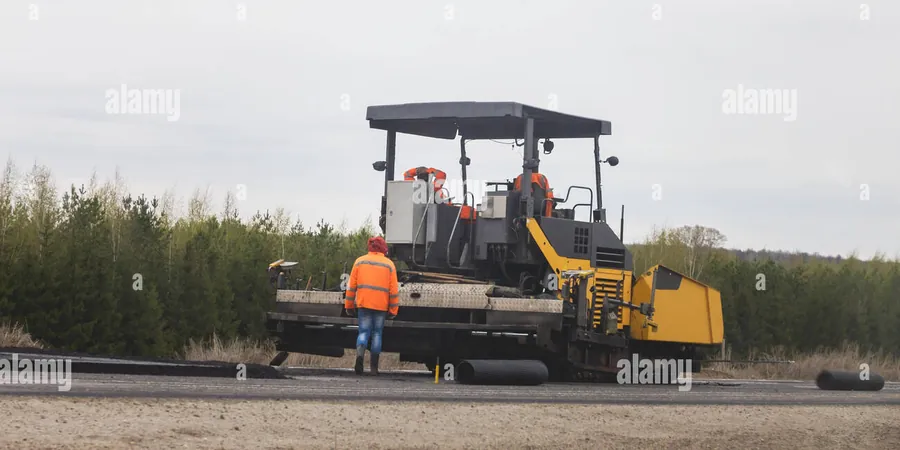
Subgrade CBR values in Chandler's alluvial soils range from 3 to 15; assuming a single value across a site risks premature pavement failure from differential support.
Methodology and scope
Local considerations
The biggest risk in Chandler's flexible pavement design is ignoring the subgrade's collapse potential. When dry, the silty sands appear competent; after a heavy monsoon storm, the same soil can lose 40% of its bearing capacity. We use soaked CBR tests and consolidation-collapse testing to quantify this behavior. Without that data, a pavement designed for a dry subgrade may rut or crack within the first wet season. Another hidden issue is shallow groundwater in the Gila River terrace areas, which can reduce base course strength and accelerate stripping in asphalt layers. Proper drainage design and moisture barriers become as critical as the structural number calculation.
Applicable standards
AASHTO Guide for Design of Pavement Structures 1993, ASTM D1883-21 (CBR Test), ASTM D698-12 (Standard Proctor), IBC 2021 Chapter 19 (Concrete & Pavement)
Associated technical services
Subgrade Investigation & CBR Testing
Boreholes and test pits to classify soils, run soaked CBR, and measure in-situ moisture content. Results feed directly into the structural number calculation.
Traffic Load Analysis & ESAL Determination
We analyze projected traffic volumes, vehicle types, and growth factors to compute equivalent single-axle loads for design life periods of 10 to 20 years.
Pavement Structural Design & Reporting
Deliverables include recommended asphalt thickness, base/subbase layers, drainage requirements, and construction specifications compliant with Chandler municipal standards.
Typical parameters
Frequently asked questions
What is the typical cost for a flexible pavement design study in Chandler?
The cost ranges from US$1,440 to US$4,880 depending on the number of test pits, CBR samples, and traffic analysis complexity. A small parking lot may fall near the lower end, while a subdivision arterial road requires the full scope.
How do Chandler's expansive soils affect flexible pavement design?
Expansive clays are less common in Chandler than in Phoenix, but they appear in localized pockets along the Price Road corridor. We identify them through Atterberg limits and free-swell tests, then design the pavement section with a stabilized subgrade or a thicker granular base to isolate the asphalt from moisture changes.
Can I use the same pavement design for a residential street and a commercial driveway?
No. Residential streets typically handle fewer than 100,000 ESALs over 20 years, while commercial driveways serving trucks may exceed 1 million ESALs. The difference in structural number can mean 2 to 4 inches of additional asphalt and base thickness. We tailor each design to the actual traffic load.