Chandler sits on the alluvial plain of the Salt River Valley, where summer monsoon storms drop 2 to 3 inches of rain in a single afternoon. The city’s variable soil profile — from sandy loam near the Agua Fria to dense clay pockets in the older subdivisions — makes accurate infiltration rates critical for any project that manages stormwater or subsurface drainage. A double-ring infiltrometer test isolates vertical percolation through the active root zone and the underlying vadose layer, giving engineers the hydraulic conductivity values they need to size basins, drywells, or leach fields. This field method, run in accordance with ASTM D3385, replaces guesswork with site-specific data. For large-scale developments, the test is often paired with a permeability lab test on undisturbed samples to cross‑check field results against controlled conditions.
A single drywell in Chandler’s clay‑rich soils can fail within five years if the design infiltration rate overestimates the actual vertical permeability by even 30%.
Methodology and scope
Local considerations
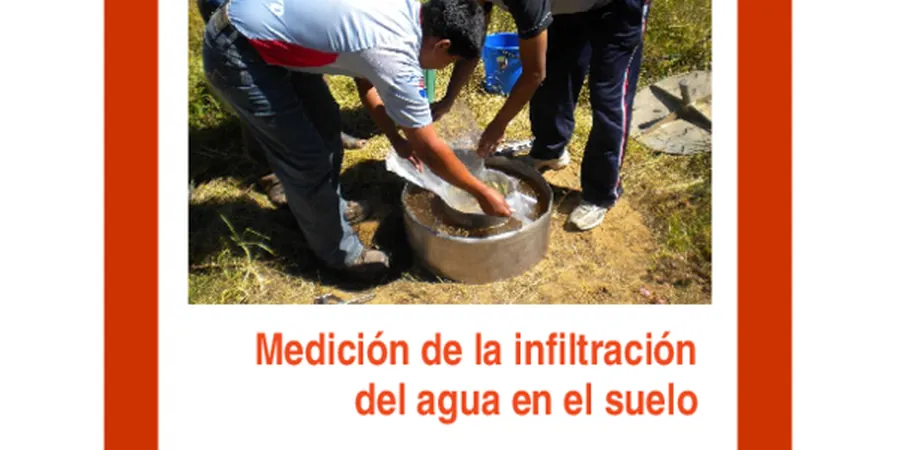
The double‑ring infiltrometer setup consists of two stainless steel rings, a Mariotte siphon reservoir, and a timing system. In Chandler’s summer heat, the water evaporates quickly, so the crew covers the rings with a plastic sheet to maintain the head. The real risk is not the equipment — it is assuming a single test represents the whole site. Clay lenses and buried caliche layers can cut the infiltration rate by a factor of ten within a few meters. Running at least three tests per acre, distributed across the proposed drainage area, reduces this uncertainty. The laboratory then reviews the field data alongside the soil classification to assign a design infiltration rate that the Maricopa County Flood Control District will accept.
Applicable standards
ASTM D3385-18 (Standard Test Method for Infiltration Rate of Soils in Field Using Double‑Ring Infiltrometer), IBC 2021 Chapter 18 (Soils and Foundations) – Section 1804.3, Maricopa County Flood Control District Drainage Design Manual (2023)
Associated technical services
Double‑Ring Infiltrometer (Full‑Scale)
Standard method for stormwater basins, detention ponds, and large‑lot developments. Includes three test locations, constant‑head monitoring, and a certified report with Ksat values and design recommendations.
Porchet Test (Single‑Ring / Borehole)
Faster alternative for small residential lots, drywell permits, and septic system approvals. A 20‑cm auger hole is excavated, filled with water, and the falling head is recorded. Suitable for preliminary screening before a full double‑ring test.
Typical parameters
Frequently asked questions
How is the infiltration test different from a standard percolation test?
The double‑ring infiltrometer measures vertical flow under a constant head, isolating one‑dimensional movement. A standard percolation test (perc test) uses a single borehole and records falling head, which includes both vertical and lateral flow. For Chandler’s layered alluvial soils, the double‑ring method gives a more reliable Ksat value for stormwater design.
Do I need a soil infiltration test for a residential drywell permit in Chandler?
Yes. The Maricopa County Flood Control District requires a field infiltration test for any drywell or retention basin serving a residential lot. A minimum of two tests per lot is typical, and the results must be submitted with the drainage report. Our double‑ring test meets the county’s criteria for design infiltration rate.
What is the typical cost range for an infiltration test in Chandler?
The cost for a standard double‑ring infiltration test in Chandler ranges from US$290 to US$380, depending on the number of test locations and site accessibility. Additional tests or travel to remote parcels may increase the total. We provide a fixed quote after reviewing the site plan.