Foundation design in Chandler must address the region’s complex alluvial soils, expansive clays, and proximity to subsidence-prone zones. Local compliance typically follows IBC with City of Chandler amendments, requiring thorough subsurface investigation to mitigate risks from differential movement. Our differential settlement analysis identifies zones of potential distress, while settlement analysis quantifies total and time-dependent deformations under structural loads.
These evaluations are critical for residential subdivisions, tilt-wall commercial buildings, and infrastructure on transitional ground, where fill materials or deep clay layers are present. Projects on engineered fills often need foundations on fill verification to confirm compaction and bearing adequacy. For mid‑rise structures or sites with high seismicity, integrating seismic foundation design ensures performance matches Chandler’s spectral acceleration requirements.
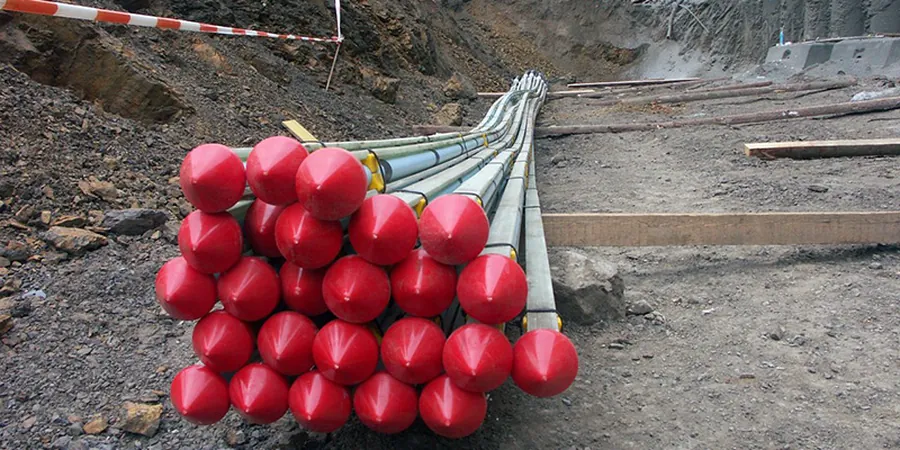
In Chandler's dry alluvial soils, the bond zone design for active anchors must account for caliche cementation that can artificially raise initial pull-out capacity.
Methodology and scope
Local considerations
Chandler's population has grown past 280,000 residents, and the city keeps expanding into former agricultural land east of Arizona Avenue. That farmland often contains buried irrigation ditches and loose topsoil that settles unpredictably under load. If an anchor bond zone falls in that disturbed layer, the capacity drops fast. The biggest risk comes from assuming uniform soil conditions across a large lot. We always require at least one soil boring per 5,000 square feet of wall footprint to calibrate the active/passive anchor design. Without that, a contractor risks pulling a test anchor and finding only 60% of the expected capacity. That means redesign, delays, and extra mobilization costs.
Applicable standards
ASCE 7-22 (Minimum Design Loads), IBC 2021 Chapter 18 (Soils and Foundations), PTI DC35.1-19 (Recommendations for Prestressed Rock and Soil Anchors), ASTM D1586-18 (Standard Test Method for SPT)
Associated technical services
Anchor Pull-Out Testing
Field verification of anchor capacity using hydraulic jacks and dial gauges. We perform proof tests at 1.33 times the design load and performance tests up to 1.5 times. Results are plotted against creep displacement criteria.
Bond Length Optimization
We calculate the minimum bond length required to develop the design load without exceeding soil shear strength. This saves material cost and reduces drilling time, especially in cemented caliche layers.
Corrosion Risk Assessment
Soil resistivity and chloride content tests determine if double corrosion protection is needed. In Chandler's dry soils, single protection often suffices, but we verify per PTI standards.
Typical parameters
Frequently asked questions
What is the difference between active and passive anchor design?
Active anchors are post-tensioned after installation, applying a preload to the soil or rock mass. They actively resist movement. Passive anchors are not preloaded; they only resist load once the soil begins to move. Active anchors are used for permanent retaining walls and tiebacks. Passive anchors suit temporary shoring or gravity walls.
What is the typical cost for anchor design and testing in Chandler?
For a typical residential or light commercial project in Chandler, the combined cost of design, pull-out testing, and reporting ranges between US$970 and US$3,280. The final price depends on the number of anchors, soil conditions, and whether corrosion protection is required.
Do I need a soil investigation before anchor design?
Yes. Active/passive anchor design requires knowledge of soil density, cohesion, friction angle, and groundwater level. Without borings and laboratory tests, the bond zone capacity cannot be calculated reliably. We recommend at least one boring per 5,000 square feet of wall.
What standards apply to anchor design in Chandler?
The primary standards are ASCE 7-22 for loads, IBC 2021 for foundation requirements, and PTI DC35.1-19 for anchor-specific recommendations. We also follow ASTM D1586 for soil sampling and ASTM D3689 for anchor testing procedures.