A few years back we were called to a housing development on the southern edge of Chandler. The cut slope had stood for two seasons, then a monsoon week triggered hairline cracks along the crest. That's when the developer realized that visual inspection alone doesn't catch subsurface movement. We installed a grid of inclinometers and piezometers, and within three months the data showed a slow, steady creep along a clay seam. That job taught us that monthly geotechnical slope monitoring in Chandler is not a luxury — it's the difference between a scheduled repair and an emergency cutback. For deeper insight into subsurface conditions, we often pair this service with resistivity imaging to map moisture changes and inclinometer surveys for precise lateral displacement readings.
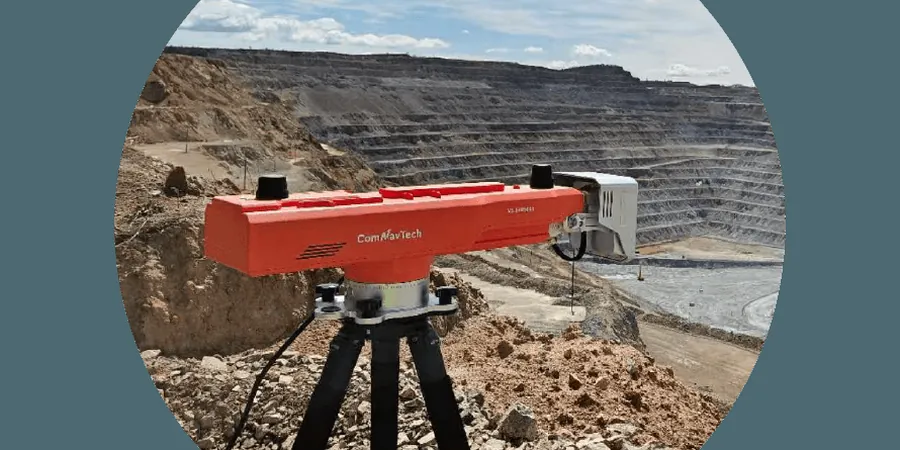
We've caught slow creep along clay seams in Chandler months before any surface sign — that's the real value of monthly data.
Methodology and scope
Local considerations
The most common slope failure mode in Chandler is translational sliding along clay layers, often reactivated by rapid infiltration during summer storms. ASCE 7 and IBC 2021 require stability assessments for any cut or fill steeper than 3H:1V, but they don't mandate ongoing monitoring. That's a gap. We've seen slopes pass a static analysis and still creep over time. The risk is not just the slide itself — it's the progressive loss of serviceability: tilted fences, cracked pavements, misaligned utilities. Our monthly data catches those trends early. We also reference the FHWA-NHI-05-039 manual for deformation acceptance criteria, which gives us clear thresholds for when to escalate from monitoring to intervention.
Applicable standards
ASTM D6236-11 (Inclinometer data collection and reduction), ASCE 7-22 (Minimum design loads, chapter on earth pressures), IBC 2021 (Chapter 18, excavation and grading), FHWA-NHI-05-039 (Geotechnical slope monitoring guidelines)
Associated technical services
Basic monthly surveillance
Manual inclinometer readings at 5–10 locations, monthly visual inspections, and a summarized data report. Best for low-risk slopes with a history of stability.
Advanced automated monitoring
Real-time in-place inclinometers and vibrating-wire piezometers with cellular telemetry. Alerts sent via SMS/email when thresholds are exceeded. Ideal for active construction sites.
Integrated geotechnical review
Monthly data from all instruments plus quarterly stability back-analysis using the latest pore pressure readings. We provide updated factor-of-safety calculations and repair recommendations.
Typical parameters
Frequently asked questions
How is monthly slope monitoring different from a one-time stability analysis?
A one-time analysis gives you a snapshot — soil strength, groundwater, and geometry at a single moment. Monthly monitoring tracks how those conditions change over time. In Chandler, seasonal rainfall and water-table fluctuations can alter pore pressures by 50% or more, which directly affects the factor of safety. We've documented slopes that passed the initial design check but crept 15 mm over a year. The monthly data lets you act before a crack becomes a failure.
What kind of instruments are installed for a typical Chandler slope?
We typically install inclinometer casings — either 2.75-inch ABS or aluminum — with a biaxial probe for lateral displacement. For pore pressure we use vibrating-wire piezometers placed in the most active clay seams. Surface movement is tracked with total station prisms or GPS. Crack gauges are added if tension cracks appear. All sensors are read monthly, with weekly checks during monsoon.
How much does monthly geotechnical slope monitoring cost in Chandler?
A basic monthly program for a single moderate slope — 5 inclinometer locations, manual readings, and reports — runs between US$450 and US$1,220 per month. Automated systems with telemetry cost more upfront but reduce field labor. The exact quote depends on site access, number of instruments, and reporting complexity. We provide a fixed monthly rate after the initial site assessment.
Do you issue alerts for sudden movements?
Yes. We set three alert levels: green (normal, <1 mm/month), yellow (watch, 1–3 mm/month), and red (action, >3 mm/month or acceleration detected). For automated sites, alerts go out within minutes of an event. For manual sites, we review the data within 48 hours of collection and call immediately if the threshold is crossed. We've prevented full-scale failures this way.