A common mistake we see among contractors in Chandler is assuming the desert soil is uniform. The alluvial fan deposits from the San Tan Mountains create dramatic lateral variability — one borehole might show silty sand, another 50 feet away hits fat clay. Without a proper CBR study for road design, you're essentially guessing the subgrade strength. We've been called to fix pavement failures where the design assumed CBR 15 across the site, but actual values dropped to 4 in the clay pockets. A thorough CBR study for road design in Chandler prevents that costly error.
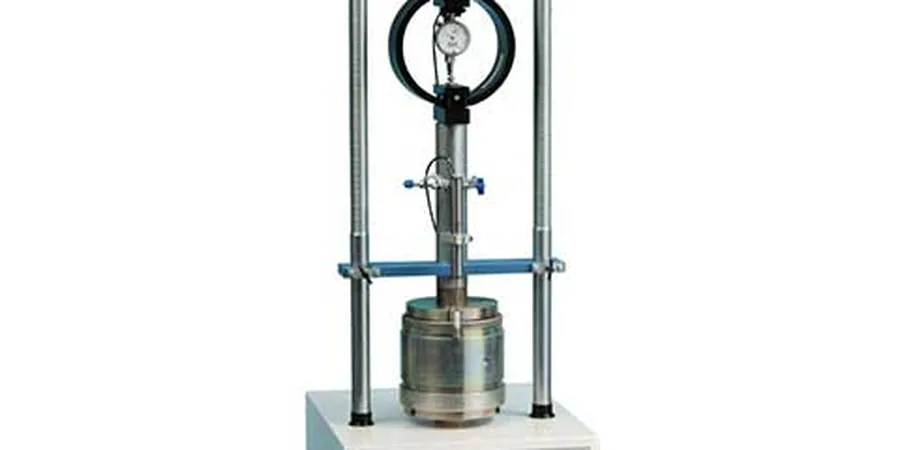
Chandler's alluvial soils can vary from CBR 15 to CBR 4 within the same street — the test catches that variability before you pave.
Methodology and scope
Local considerations
Chandler sits in the Sonoran Desert, but summer monsoon storms can dump 2 inches of rain in an hour. That rapid wetting is the worst-case scenario for pavement subgrades — the clay minerals swell, strength drops, and the CBR value you measured in dry conditions becomes irrelevant. We always recommend soaked CBR testing for Chandler projects because the dry CBR can be double the soaked value. Ignoring this risk leads to pavement rutting and cracking within the first monsoon season. A proper CBR study for road design accounts for that worst-case moisture condition, not the optimistic dry reading.
Applicable standards
ASTM D1883-21 (CBR of Compacted Soils), AASHTO T-193 (CBR Test), ASTM D698-12 (Standard Proctor), ASTM D1557-12 (Modified Proctor), AASHTO 1993 Pavement Design Guide
Associated technical services
Field CBR Testing (In-Situ)
For existing subgrades or compacted fills, we perform in-situ CBR tests using a calibrated penetrometer directly on the ground. This gives you real-time data without waiting for lab curing. Especially useful for pavement rehabilitation on Chandler's older roads where the original design data is missing.
Laboratory CBR with Proctor Integration
We compact undisturbed and remolded samples at different moisture contents to produce a full CBR versus moisture curve. This tells you not just the CBR at optimum, but how much strength you lose if the subgrade gets wet — critical for Chandler's monsoon-prone summers.
Typical parameters
Frequently asked questions
What is the difference between soaked and unsoaked CBR for Chandler soils?
Unsoaked CBR measures strength at the natural moisture content of the soil — which in Chandler is usually low (3-5% for sands, 8-12% for clays). Soaked CBR submerges the sample for 96 hours to simulate worst-case saturation. For Chandler's expansive clays, the soaked CBR can be 40-60% lower than the unsoaked value. We always recommend soaked testing for road designs that will see irrigation or stormwater infiltration.
How does the CBR test relate to pavement thickness design?
The AASHTO 1993 design method uses CBR directly to calculate the required structural number (SN) of the pavement. A CBR of 6 might require 10 inches of base course, while a CBR of 12 might need only 6 inches. The difference in material cost for a mile of road in Chandler can be tens of thousands of dollars, so an accurate CBR study for road design pays for itself.
How long does a CBR study for road design take in Chandler?
A standard laboratory CBR test with 4-day soaking takes about one week from sample receipt. In-situ field CBR can be done same-day if the subgrade is accessible. For Chandler projects with tight deadlines, we can expedite the soaking phase to 48 hours with a modified procedure, but we recommend the full 96-hour soak for critical pavements.
What is the typical cost range for a CBR study in Chandler?
For a standard CBR study including sample preparation, compaction, and soaked testing, the cost typically ranges between US$160 and US$350 per sample. Volume discounts apply for multiple samples from the same project. This includes a full report with CBR values, moisture-density curves, and pavement thickness recommendations per AASHTO 1993.