A new cell expansion at the Southeast Regional Landfill in Chandler required a thorough geotechnical investigation to ensure safe waste containment. The site sits on alluvial deposits with variable clay and sand layers, typical of the Salt River Valley. For any landfill project in Chandler, understanding the subsurface is non-negotiable. We combined test pits with a cone penetration test to map stratigraphy continuously, then followed up with laboratory permeability tests on undisturbed samples. The goal was clear: define the natural barrier properties and design a liner system that meets Arizona Department of Environmental Quality standards.
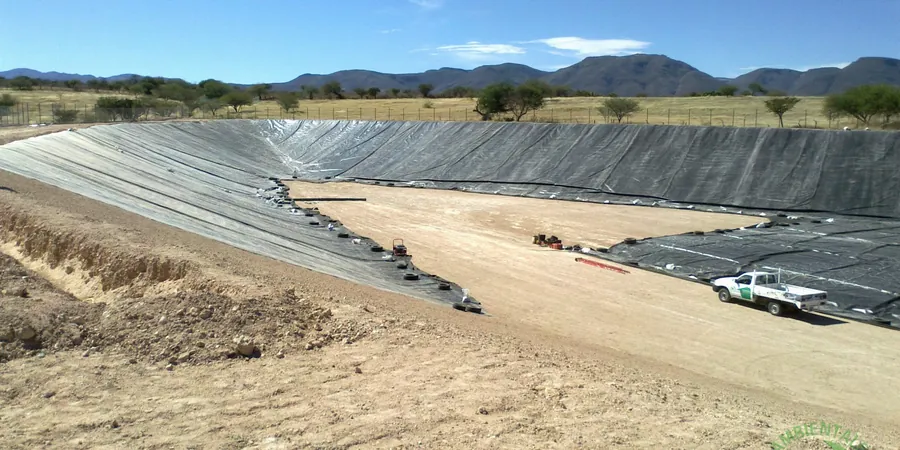
A single clay lens with permeability above 1x10⁻⁶ cm/s can compromise an entire landfill liner system.
Methodology and scope
- Hydraulic conductivity target: less than 1x10⁻⁷ cm/s
- Plasticity index: minimum 15% for clay barriers
- Compaction: 95% of Standard Proctor (ASTM D698)
- Shear strength: direct shear on compacted clay liners
Local considerations
Chandler grew rapidly from cotton fields to suburban communities in the 1990s and 2000s. Old landfills that closed decades ago now sit beneath parks, schools, and residential tracts. Without proper foundation evaluation, these legacy sites can settle unevenly or generate methane pockets. Landfill geotechnics addresses this risk by assessing waste compressibility, gas migration paths, and long-term differential settlement. We use settlement plates and gas monitoring wells to track performance after closure. The challenge in Chandler is the combination of deep alluvial soils and buried waste that can shift over time.
Applicable standards
ASTM D1586 (SPT), ASTM D698 (Standard Proctor), ASTM D5084 (Hydraulic conductivity), ASTM D3080 (Direct shear), ADEQ Solid Waste Rules (R18-13)
Associated technical services
Liner System Design Testing
Permeability, compaction, and shear strength tests on candidate clay and geosynthetic clay liners. We verify that the liner meets the 1x10⁻⁷ cm/s target under site-specific conditions.
Slope Stability Analysis for Landfills
Limit equilibrium and finite element modeling of waste slopes and cover soils using Bishop and Spencer methods. We evaluate seismic stability per ASCE 7 for Chandler's moderate seismic zone.
Post-Closure Settlement Monitoring
Installation of settlement plates, inclinometers, and gas wells. We track long-term deformation and gas migration to ensure compliance with ADEQ closure permits.
Typical parameters
Frequently asked questions
What tests are required for a landfill liner in Chandler?
Standard tests include hydraulic conductivity (ASTM D5084), Standard Proctor compaction (ASTM D698), and direct shear (ASTM D3080). For clay barriers, plasticity index (ASTM D4318) and grain size (ASTM D422) are also needed. All tests must be performed on material from the proposed borrow source, not from a different site.
How much does a landfill geotechnics study cost in Chandler?
A typical geotechnical investigation for a landfill cell or closure project ranges from US$2,250 to US$8,260, depending on the number of borings, laboratory tests, and the complexity of the waste mass. Larger expansions with multiple cells may exceed this range.
Is slope stability analysis required for landfill closure in Arizona?
Yes. ADEQ requires a long-term stability analysis for final cover slopes, typically using a factor of safety of 1.5 for static conditions and 1.1 for seismic loading. We use Spencer's method with residual shear strength parameters for waste interfaces.